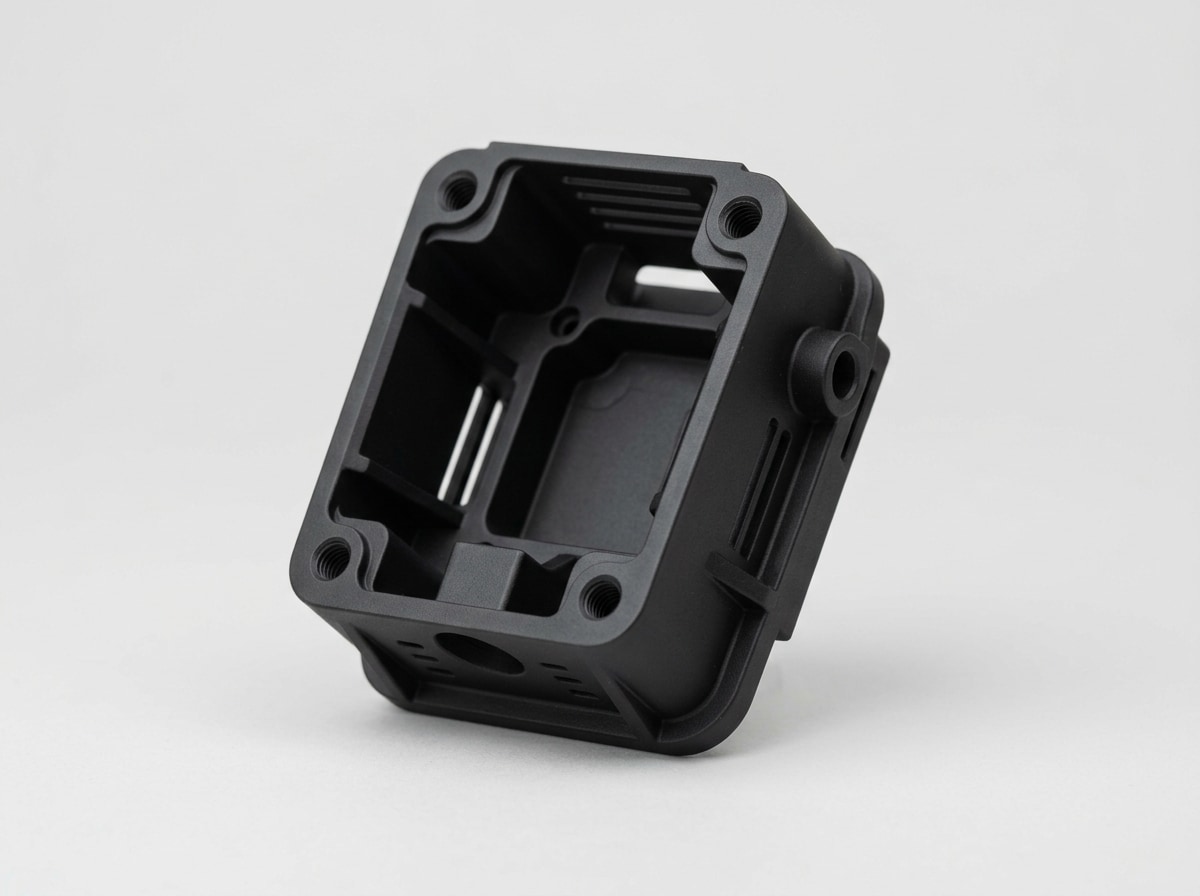
SLA 3D printing cures and builds up a liquid resin layer by layer to form the part.
Photopolymer resin hardens when exposed to a UV laser. SLA 3D printing directs a UV laser into a vat of liquid resin, building the part one layer at a time.
*SLA: Stereo Lithography Apparatus
Curious about 3D printing methods besides SLA? Check out our 3D Printing Service.
| SLA Polishing | A premium post-processing treatment where technicians manually sand the surface after support removal to eliminate layer lines and achieve a smooth finish. Suitable for parts scheduled for painting, display mockups, or prototypes requiring high surface quality. For shape verification only, SLA Bead Blasting is sufficient. Manual processing results in longer lead times and higher costs, and sanding may be limited on complex internal structures or undercuts. | ||
| SLA Bead Blasting | A cost-effective post-processing treatment that evens out the surface tone through bead blasting after washing and UV curing, without manual sanding. Suitable for internal review prototypes or when cost and lead time efficiency are the priority. Not suitable for display mockups, parts with fine surface details, or parts scheduled for painting. Consider subsequent finishing processes when selecting this option. | ||
| Bead Blast (Translucent) | A post-processing treatment that uniformly blasts transparent resin surfaces to create a translucent matte finish. Suitable for lighting diffusers, covers, and parts where fingerprints or scratches should be less visible. Parts requiring full transparency should use SLA Transparent instead. Translucency level varies by blasting intensity, and fine surface details may be slightly softened. | ||
| Polished (Transparent, 3DP) | A post-processing treatment that sands and coats semi-transparent resin prints to achieve optical clarity. Without post-processing, layer lines prevent transparency. Suitable for lenses, covers, windows, and optical review prototypes. Not suitable for opaque prints, non-SLA outputs, or parts requiring surface texture. Manual sanding may extend lead times, and uniform clarity is harder to achieve on complex curved surfaces. | ||
| Chrome Painting | A painting process that mimics the high-gloss mirror look of chrome plating without actual plating. Ideal for complex geometries, appearance mockups, display parts, or when a metallic finish is needed at lower cost. Not recommended for functional parts requiring real plating-level durability. Color is fixed as chrome silver mirror, coating may vary on curved or undercut surfaces, and metal substrates require degreasing and sanding prior to painting. | ||
| Rubber Paint | A rubber-textured painting process based on Pantone U colors, finished with SF coating after surface preparation and primer application. Suitable when a rubber-like texture, strong matte color expression, or discoloration prevention is needed. Not suitable for parts subject to strong friction or those used in environments where chemical or heat resistance is critical. The finish may peel under strong friction or exposure to acids or ethanol. | ||
| Matte Paint | A matte painting process based on Pantone U colors, finished with plastic paint after surface preparation and primer application. Suitable when a matte surface finish is needed or when preventing material discoloration is a priority. Not suitable for parts subject to frequent surface friction or those requiring a very smooth surface finish. The finish may peel or degrade under strong friction or exposure to acids or ethanol. Color variation may occur due to manual color mixing. | ||
| Glossy Paint | A high-gloss painting process based on Pantone C colors, finished with UV coating after surface preparation and primer application. Suitable for exterior parts requiring a glossy, smooth surface or vivid color expression. Not suitable for parts requiring tight tolerances or those exposed to heat or chemicals. Color variation may occur due to manual color mixing, and the finish may degrade under strong friction or exposure to acids or ethanol. | ||
| As Machined | Parts are delivered as-is after manufacturing, with no additional surface treatment. Machining marks and scratches may remain on the surface. Ideal for functional parts where dimensional accuracy is the top priority, internal components, or when fast turnaround without extra cost is needed. Not recommended for parts where surface appearance matters or metal parts exposed to corrosion or wear. Metal parts may have burrs and machining marks, and 3D-printed parts may show support removal traces. |
Creallo Manufacturing Case