
What is Vacuum Casting?
Vacuum casting is a manufacturing process that involves creating a silicone mold based on a master model, then injecting liquid resin into the mold under vacuum to produce solid parts.
This method is commonly used in the following cases:
- High-mix low-volume (HMLV) production
- Functional prototyping
- Design mock-ups and verification
- Pre-production runs for testing before mass production
View Creallo Vacuum Casting Page→
Vacuum Casting Process
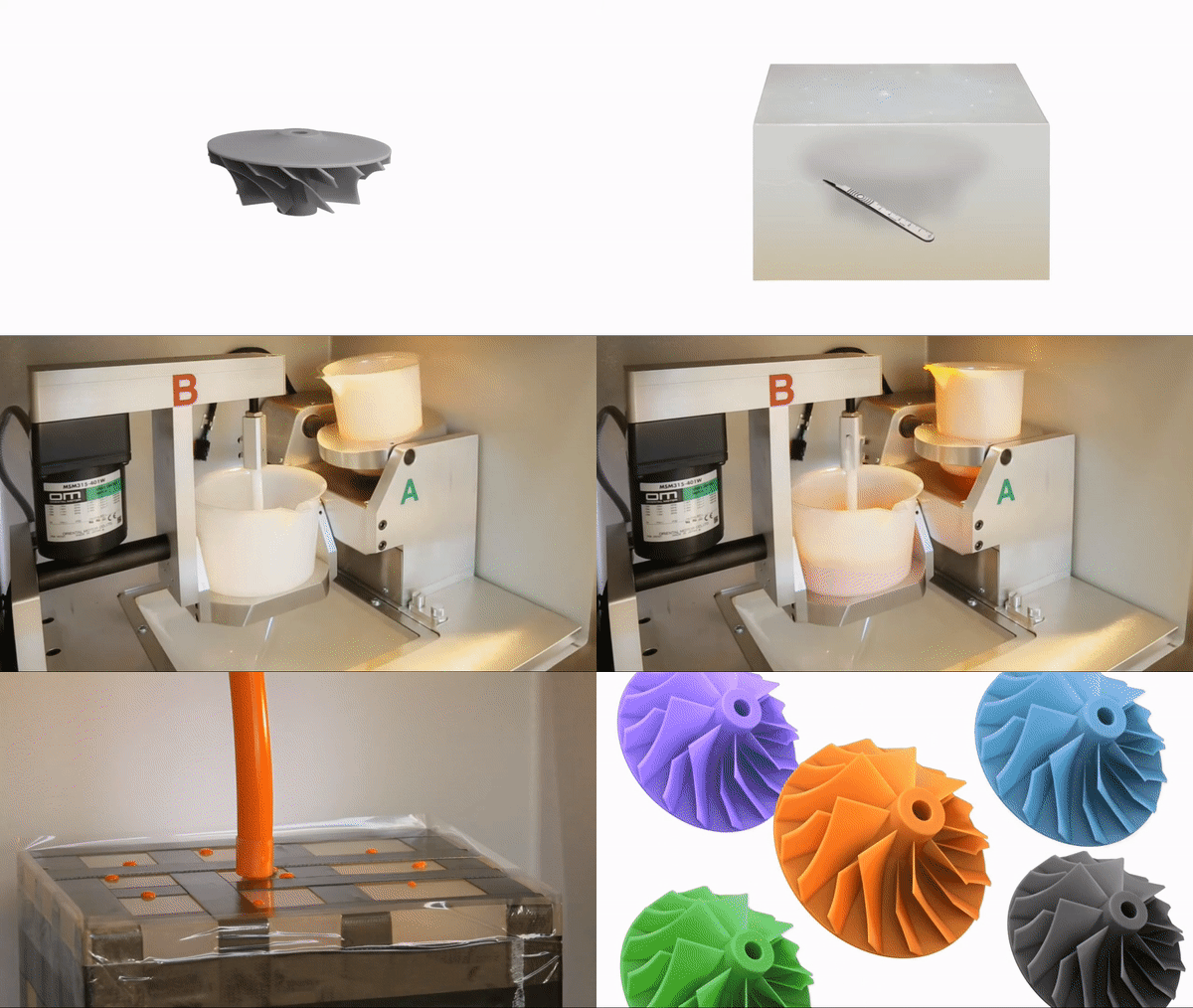
1. Master Model Production
A precise master model identical in shape to the final product is created using SLA 3D printing or CNC machining.
Since the mold and the final parts inherit the surface finish of the master model, post-processing like sanding and painting is essential.
2. Silicone Mold Creation
After fixing the master model, liquid silicone is poured into a mold box to form the mold.
Once the silicone is degassed and cured, the mold is removed and the master extracted, leaving a cavity for casting.
3. Vacuum Resin Casting
The silicone mold is assembled, and resin or polyurethane material is injected using vacuum equipment.
The part is then cured, removed from the mold, and finished through processes such as gate trimming and polishing.

Advantages and Disadvantages of Vacuum Casting
Advantages
- Uniform internal structure due to resin curing
- Wide range of material options including ABS-, PC-, TPU-like resins
- Much lower cost and lead time than metal tooling
- Enables integrated multi-material products via two-shot molding
- Easy to post-process
Disadvantages
- Mechanical and physical properties may differ from original materials
- Mold creation takes time and incurs cost
- Generally limited to small-to-medium sized parts
- Undercuts and parting lines must be considered in the design
※ Silicone molds can typically be reused 10–20 times, making them highly cost-effective for low-volume production.
Common Materials Used in Vacuum Casting
Material Type | Description |
| ABS-like PU | Excellent impact resistance and mechanical strength |
| PC-like PU | Ideal for clear or high-strength applications |
| TPU-like PU | Offers flexibility and high elasticity |
| PMMA-like PU | Transparent resin as an acrylic alternative |
| Colored/Opaque PU | Supports a wide range of colors |
※ Be sure to consider properties such as heat resistance, hardness, and strength according to your product’s application.
Industry Applications of Vacuum Casting
Industry | Use Cases |
| Automotive | Dashboards, switch panels, interior components |
| Medical | Customized medical devices, component testing |
| Electronics | Small cases, buttons, circuit protection covers |
| Robotics & Drones | Lightweight structures, functional exteriors |
Design & Quality Management Tips
Design Optimization
- Avoid undercuts, thin walls, and sharp corners as they can hinder mold separation. Design with demolding in mind.
Quality Control
- Dimensional accuracy is verified using precision tools such as calipers and 3D scanners.
- Monitor mold wear over repeated use and plan for timely replacement.
At Creallo, we offer a wide selection of materials and finishing options optimized for vacuum casting, along with design consulting tailored to your product’s purpose and application.
If you're planning a project using vacuum casting, we recommend referring to this guide as a starting point for efficient product development.
View Creallo Vacuum Casting Page→
View Available Materials & Finishes for Vacuum Casting →
