
FAQ
Find the answer you need right away in the FAQ.
1-1.Can I paint directly on 3D printed parts?
Layer lines may still be visible after painting, since our standard sanding focuses on support removal rather than full smoothing — for the best finish, sand further and apply a primer before painting.
1-2.Can I supply my own material for 3D printing?
No. For quality and safety, only verified materials are used per machine specification.
1-3.Can I specify build orientation or bed placement?
Build orientation, bed placement, and print speed are set by our engineers to the optimal method for your part.
If you have a special request, please submit it via 1:1 inquiry.
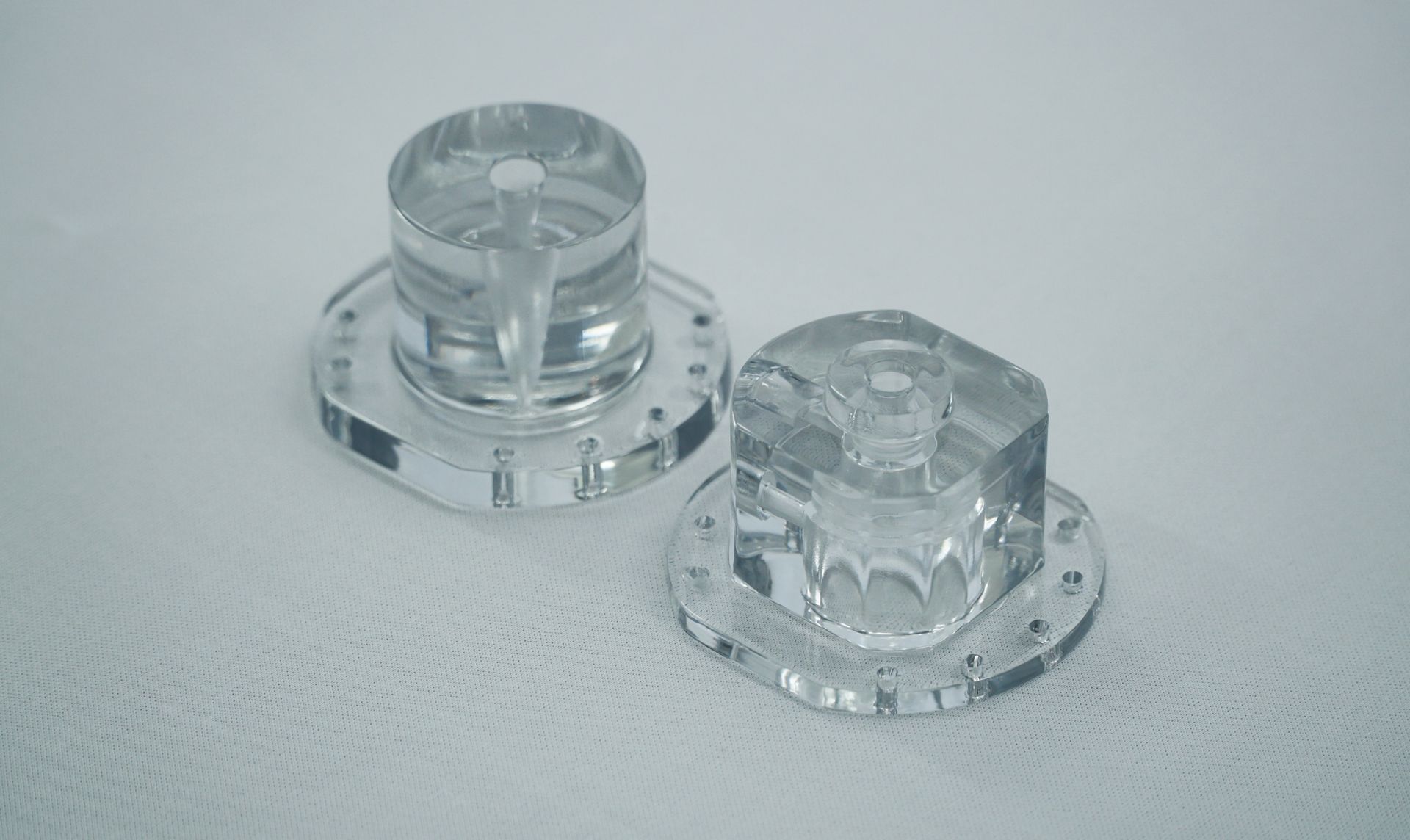
1-4.What’s the difference between translucent and fully transparent resin finishes?
When using clear resin, the default output is semi-transparent.
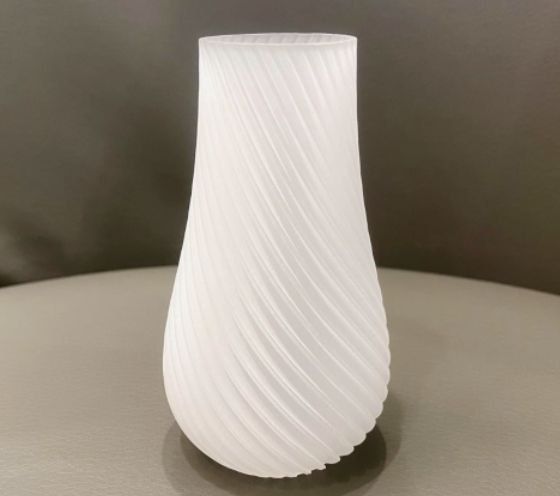
By applying surface sanding and transparent finishing to the semi-transparent part, it can be processed into a transparent product similar to acrylic, as shown below.
1-5.Is 3D printing only suitable for prototyping? Can it be used for mass production as well?
3D printing supports everything from rapid prototyping to small-batch and bridge manufacturing, covering the full range from concept validation to end-use parts.
1-6.Is Sand Blasting a lower-quality option?
No. Sand blasting is not intended to reduce quality, but to standardize the process for consistent results and better cost efficiency.
Basic support removal and general surface cleaning are included, while additional precision surface finishing steps are excluded.
1-7.What is the difference between Sand Blasting and Surface Finishing as post-processing options for 3D printing?
Sand blasting is a post-processing option that focuses on support mark removal and general surface cleaning, offering faster lead times and better cost efficiency.
Surface finishing, on the other hand, includes additional precision sanding and polishing after support removal, providing higher appearance quality as a premium option.
You can choose the appropriate option based on your application and required quality level.
1-8.Which option should I choose depending on my application?
For functional prototypes such as form verification or assembly testing, sand blasting is recommended due to its faster turnaround time and cost efficiency.
For applications where appearance quality is critical—such as display models, photography, or parts before painting—surface finishing is recommended, as it provides a more uniform and smoother surface.